

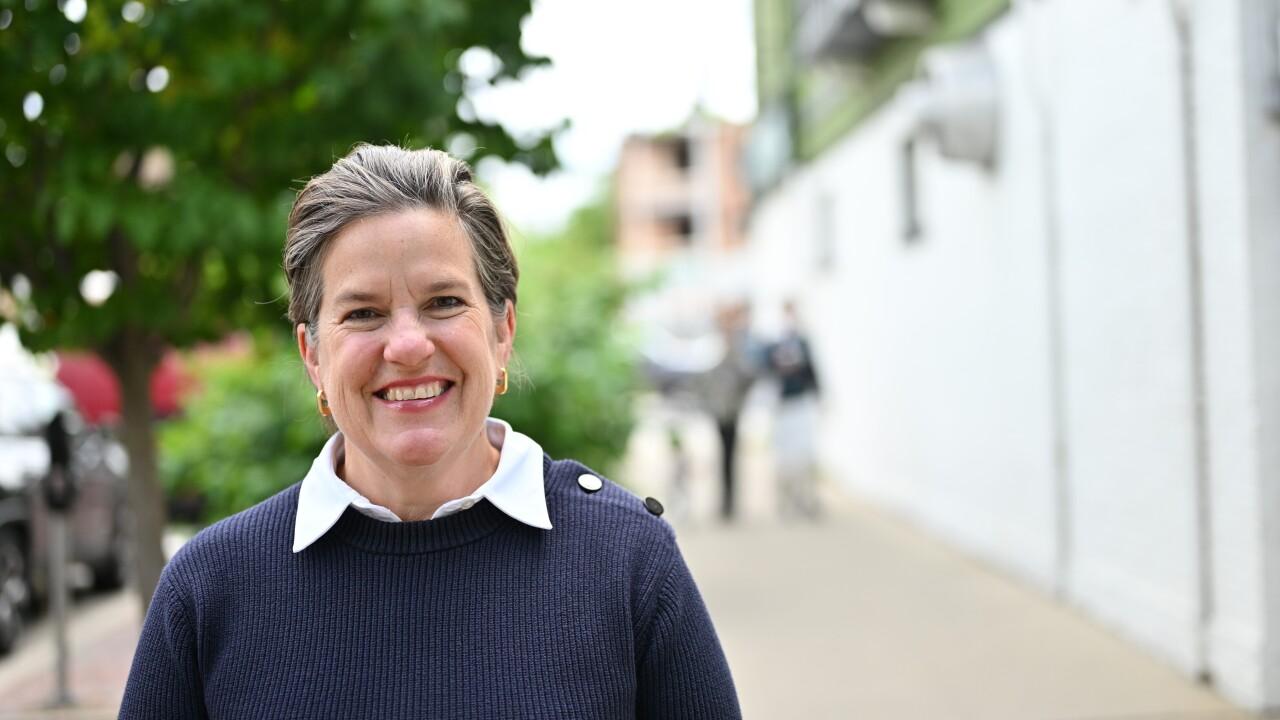
Source: Missy Hughes for Governor
In conversation with Missy Hughes
Missy Hughes is a former executive of Organic Valley and served on the Wisconsin Economic Development Corporation before stepping down in Sept. to run for governor.

Jan 20, 2026, 2:02 PM CST


Share
Missy Hughes entered the race for Governor in September. Hughes is the former head of the Wisconsin Economic Development Corporation. She was appointed in 2019 and stepped down to run for governor.
Before that, Hughes served for nearly two decades as an executive at Organic Valley, a farmer-owned dairy cooperative.
Hughes appeared on the WXCO Morning Show with Chad Holmes and Isabela Nieto on January 20. Here’s what she had to say.
This conversation has been edited for clarity and brevity.
How can farmers diversify their income in a tough agricultural economy?
Some farmers are looking for ways to diversify their income in a tough agricultural market, especially as trade policies and tariffs have reduced markets for crops like soybeans. One option is to utilize farmland for both traditional agriculture and renewable energy. We need an all-in approach that considers different ways to grow the economy while, especially in Wisconsin and the North Woods, protecting natural resources and farmland so they are preserved for future generations.
How would you advocate for rural health care as hospitals and services disappear?
The key, especially when it comes to rural health care, is having hands-on experience. I served on the board of our local hospital in southwestern Wisconsin and saw firsthand the difficult decisions being made—such as whether a community can support OB-GYN services or whether patients must drive an hour for care.
Where I live now, people have to travel an hour for prenatal care and for delivery services, especially if complications arise. That’s not sustainable. In my work, we partnered with a university to develop programs to train more nurses and nurse practitioners for rural communities. We focused on preventative care, workplace health education, and expanding telehealth so people can access specialized advice without always having to leave their communities. While some services will always require travel, strengthening local care as much as possible is incredibly important.
How would you handle threats or pressure from the federal government as governor?
Threats from the federal government often create crisis and instability, so you need a leader who can understand all aspects of a situation in the moment. For example, with immigration enforcement actions, there may be immediate crises on local streets as well as ongoing violations of civil rights affecting immigrant communities.
A leader must be prepared to act creatively and help communities remain resilient. I’ve had that experience—working with farmers trying to save their farms from consolidation, and supporting businesses during the pandemic by helping government respond innovatively in moments of crisis.
It’s also important to stand up to Donald Trump. I grew up seeing him in the headlines and understand how he operates as a bully who feeds on attention. We need resilience, strength, and the ability to move forward without being derailed by that behavior.
What can a governor do to help farmers hurt by federal trade policies?
As secretary at WEDC, I traveled internationally and saw firsthand how highly Wisconsin ginseng is valued—especially in China, where it is considered among the best in the world. Building relationships and helping international partners understand that Wisconsin wants to continue working together is critical.
There’s no question that tariffs have damaged markets and caused real harm to growers who rely on exports. We need to expand markets and ask where else in the world Wisconsin ginseng is in demand, including regions with large Chinese populations. That kind of work requires being hands-on, creative, and willing to roll up your sleeves and meet directly with people. That’s work I’ve done before and would continue to do.
What sets you apart from other candidates, particularly on economic development?
My background in economic development has allowed me to sit down with community leaders across the state and understand what each community is trying to accomplish. When a community has a vision—such as redeveloping a riverfront or downtown—I ask how the state can support that work, what barriers exist, and whether state resources or lessons from other communities can help.
I’ve seen the whole state through my work in agriculture, dairy, and economic development, and I believe we don’t need to reinvent the wheel. Communities can learn from each other and support one another. Many places feel isolated, but good work is happening everywhere. A governor should help connect those efforts and build a fabric of collaboration across Wisconsin.
Is there anything about you or your campaign that people may not be asking about?
The hardest and most meaningful work I’ve done has been raising my three children, including twins. My husband and I worked hard to give them the opportunity to thrive, and that’s what I want for families across Wisconsin.
I live in a very rural area, surrounded by animals, and I understand how rural communities think. At the same time, I’ve done extensive work in Milwaukee and Madison. There’s a lot to my story, and I encourage people to learn more about my background and campaign.

Isabela Nieto is a reporter for Civic Media based in Wausau, where she reports for WXCO/Bull Falls Radio. She moved to central Wisconsin after stints reporting local and state news in Illinois. Reach her at [email protected].
Want More Local News?

Civic Media
Civic Media Inc.
The Civic Media App
Put us in your pocket.